

This spring's big exhibition at Nationalmuseum (Stockholm, Sweden), Passions, is all about emotion in art. The exhibition features over 100 works from the Renaissance to the present day, some from Nationalmuseum’s own collections, and others obtained on loan.

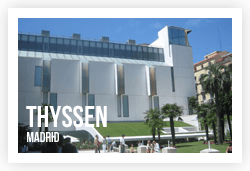
In conjunction with the celebration of International Women’s Day and within the context of the Women’s Gazes Festival organised by MAV (Women in the Visual Arts), the Museo Thyssen-Bornemisza is presenting a programme of activities organised in collaboration with a number of women’s groups with whom the Department of Research and Further Studies has been working in recent years.

Presenting a selection of masterworks assembled from public and private collections across the world, the new Centre Pompidou's exhibition (Paris, France) examines a distinctive aspect of Matisse’s art: his repeated explorations of the same subject through different treatments – for him a way of exploring art itself.

Pablo Picasso invented collage as an artistic technique around the spring of 1912. But long before this, in Barcelona in March 1899, he made a drawing in which he glued a technically reproduced image: the portrait of an actress. We now know that this piece is a picture card from a matchbox, which were very popular in the late nineteenth century.

Pablo Picasso was well aware of photography's power to communicate, and from his early years had been interested in the medium, experimenting with it and exploring its possibilities. But, above all, he seems to have understood the importance of creating a public image, and the ability to sustain a cult of personality.

